> ## Documentation Index
> Fetch the complete documentation index at: https://docs.garden.finance/llms.txt
> Use this file to discover all available pages before exploring further.
# Intent Flow
> Understand the complete technical flow of how user intents are processed in Garden protocol
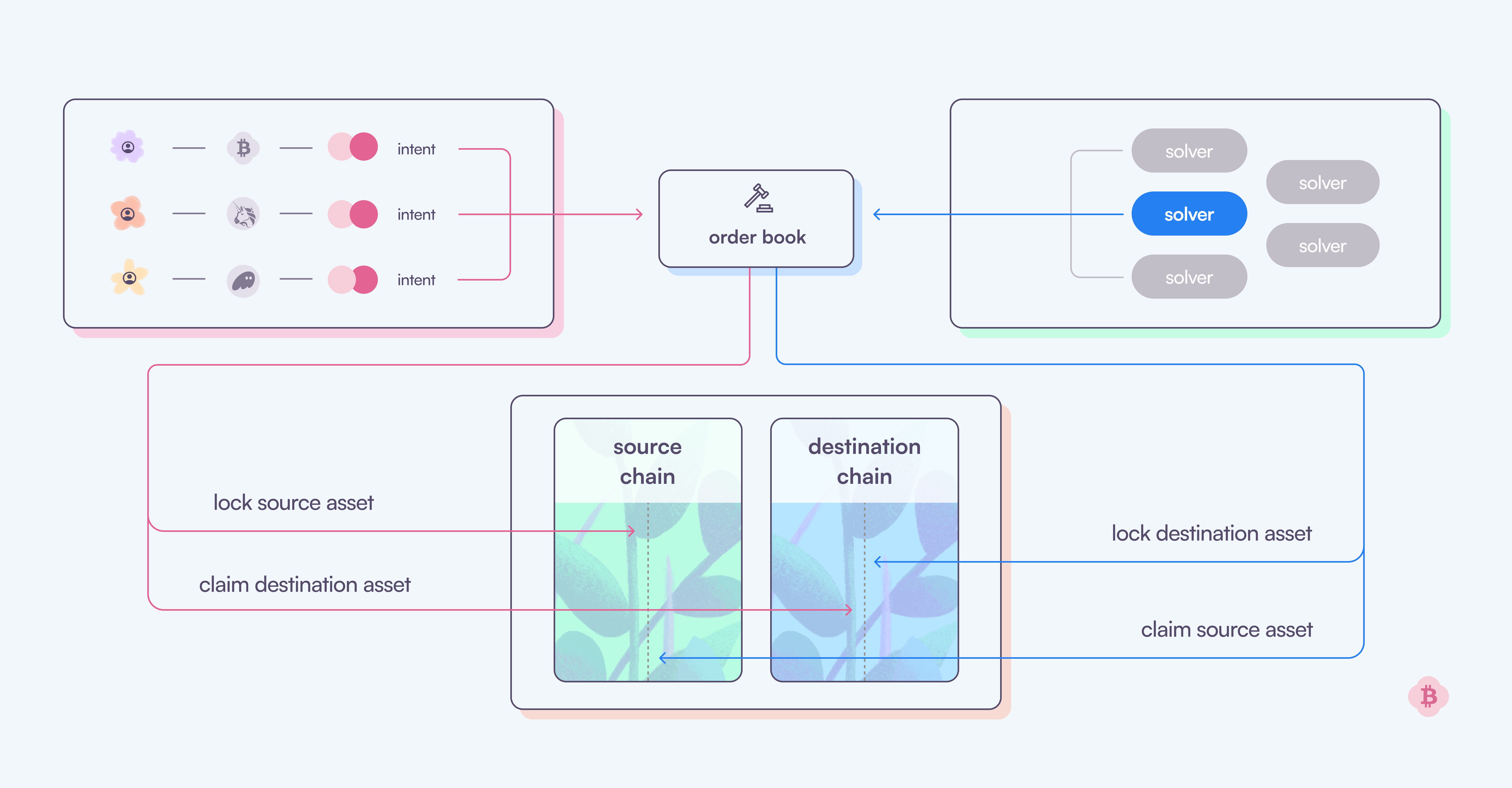 Now that we know all the actors and modules in the system, let's take a detailed technical look at how all of them come together.
Here's a simplified representation of the process:
User requests quote → Signs intent → Submits intent to order book
Order book selects solver → Solver begins settlement
User initiates transaction → Solver executes on destination chain
User redeems funds → Solver completes settlement
Here is the detailed look into each step of the process.
## Creating an intent
The user starts the process by requesting a **quote** for a desired swap. The quote contains details like the input asset, output asset, chains involved, and the desired amounts.
The user receives the quote and must **accept it** by creating a **signed intent message.**
This signed intent represents the user's objective, including parameters like assets, chains, amounts, and expiration details.
## Selection of solver in the order book
Once the user signs the intent, it is submitted to the **order book**, a decentralized system where solvers compete to fulfill the intent.
### Auction process:
All solvers submit their quotes based on the intent's parameters.
The **best quote** (lowest price or highest efficiency) is determined.
Solvers with a **higher staker score** than the solver with the best quote have a 5-second window to match the quote.
* **No acceptance:** The best-quote solver wins.
* **One acceptance:** The accepting solver wins.
* **Multiple acceptances:** The solver with the highest staker score wins.
Once a solver is selected, they prepare to execute the swap.
## Settlement: User-side execution
The settlement process begins once the selected solver is confirmed.
The user must **initiate settlement** by creating a **signed transaction message** for the intent.
The signed message is submitted to a **relayer**, which broadcasts it on the blockchain.
The transaction is processed on-chain, and the user's funds are locked or transferred to the relevant contract or wallet.
Once the transaction achieves the required number of blockchain confirmations, the settlement progresses to the solver's side.
## Settlement: Solver-side execution
The solver, upon receiving confirmation of the user-side transaction, initiates the corresponding transaction on their end.
This step involves the solver locking funds on the destination chain, earmarked for the user.
The solver's transaction also undergoes a confirmation process on the destination chain to ensure security and reliability.
## Redemption
After the solver's transaction achieves the required confirmations:
* The user can redeem funds on destination revealing the swap prehash.
Once the user reveals the prehash the solver is able to recieve funds on the source chain, completing the swap.
Now that we know all the actors and modules in the system, let's take a detailed technical look at how all of them come together.
Here's a simplified representation of the process:
User requests quote → Signs intent → Submits intent to order book
Order book selects solver → Solver begins settlement
User initiates transaction → Solver executes on destination chain
User redeems funds → Solver completes settlement
Here is the detailed look into each step of the process.
## Creating an intent
The user starts the process by requesting a **quote** for a desired swap. The quote contains details like the input asset, output asset, chains involved, and the desired amounts.
The user receives the quote and must **accept it** by creating a **signed intent message.**
This signed intent represents the user's objective, including parameters like assets, chains, amounts, and expiration details.
## Selection of solver in the order book
Once the user signs the intent, it is submitted to the **order book**, a decentralized system where solvers compete to fulfill the intent.
### Auction process:
All solvers submit their quotes based on the intent's parameters.
The **best quote** (lowest price or highest efficiency) is determined.
Solvers with a **higher staker score** than the solver with the best quote have a 5-second window to match the quote.
* **No acceptance:** The best-quote solver wins.
* **One acceptance:** The accepting solver wins.
* **Multiple acceptances:** The solver with the highest staker score wins.
Once a solver is selected, they prepare to execute the swap.
## Settlement: User-side execution
The settlement process begins once the selected solver is confirmed.
The user must **initiate settlement** by creating a **signed transaction message** for the intent.
The signed message is submitted to a **relayer**, which broadcasts it on the blockchain.
The transaction is processed on-chain, and the user's funds are locked or transferred to the relevant contract or wallet.
Once the transaction achieves the required number of blockchain confirmations, the settlement progresses to the solver's side.
## Settlement: Solver-side execution
The solver, upon receiving confirmation of the user-side transaction, initiates the corresponding transaction on their end.
This step involves the solver locking funds on the destination chain, earmarked for the user.
The solver's transaction also undergoes a confirmation process on the destination chain to ensure security and reliability.
## Redemption
After the solver's transaction achieves the required confirmations:
* The user can redeem funds on destination revealing the swap prehash.
Once the user reveals the prehash the solver is able to recieve funds on the source chain, completing the swap.